2.5 Gal Spill-Proof Car Trash Can: Headrest or Console
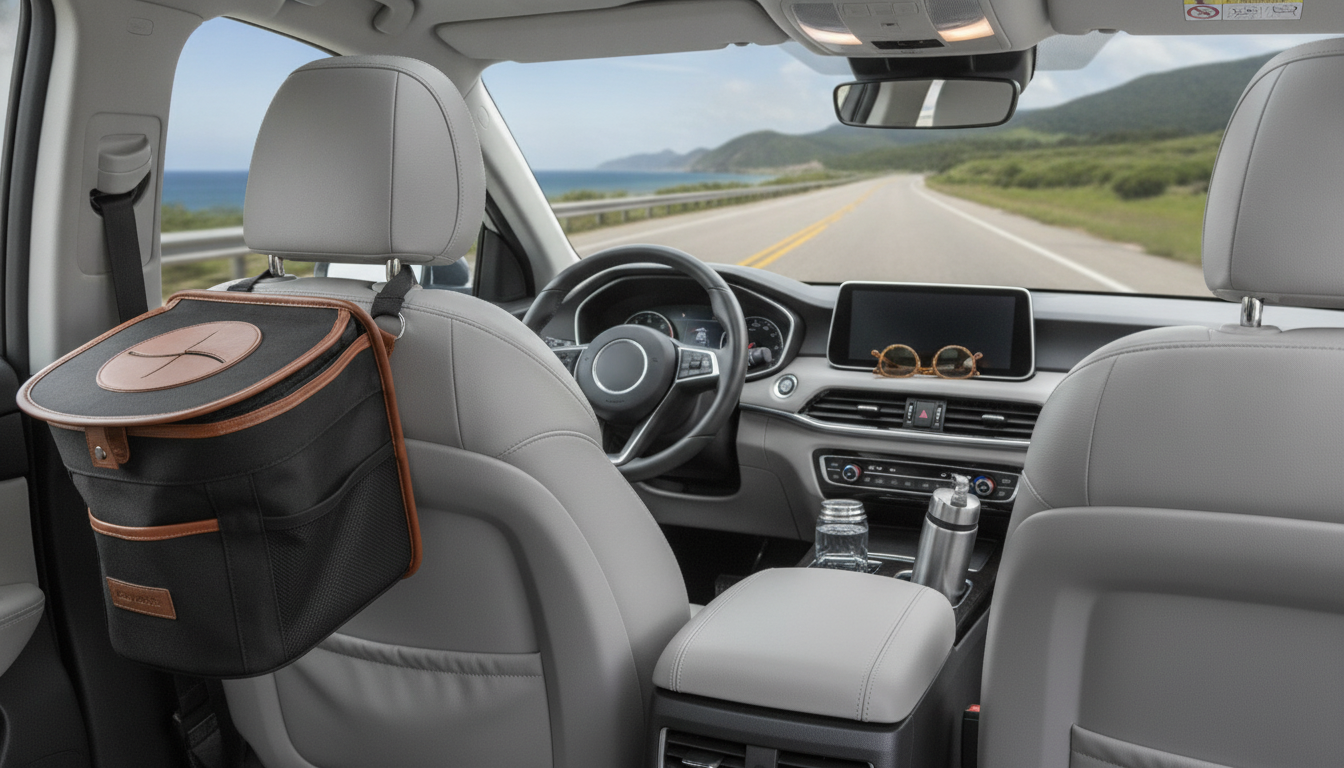
Spill-Proof Car Trash Can (2.5 Gal) with Headrest or Central Console Attachment
Keeping a vehicle tidy is easier when trash has a dedicated place that stays upright, contains odors, and doesn’t slide around during braking or turns. A spill-proof, hanging car trash can helps manage wrappers, tissues, receipts, and sticky messes while keeping the cabin organized for commuting, carpools, and road trips.
What Makes a Spill-Proof Car Trash Can Different
A standard bag on the floor can tip, roll, or leak—especially when it’s holding takeout containers, damp napkins, or half-finished drinks. A spill-aware design focuses on keeping messes contained so cleanup stays simple.
- Leak-resistant, spill-aware construction helps reduce the chance of liquid or crumbs escaping into carpets, seat rails, and cup holders.
- Hanging placement keeps trash off seats and floors, cutting down on clutter and making vacuuming faster.
- 2.5-gallon capacity hits a practical middle ground: large enough for daily build-up, small enough to fit neatly in most cars, SUVs, and trucks.
- Flexible mounting options accommodate different cabin layouts—whether the priority is front-seat convenience or easy access for back-seat passengers.
Since loose items can tempt drivers to reach down or fumble around, it also helps to keep trash contained and in a predictable spot. For safe-driving reminders, see guidance from NHTSA on distracted driving and the CDC’s motor vehicle safety information.
Headrest vs Central Console Attachment: Choosing the Best Spot
Where the trash can hangs matters as much as the container itself. The ideal placement keeps it easy to use while staying out of the way of pedals, airbags, seat tracks, and driver controls.
- Headrest mounting keeps trash accessible to rear passengers and out of the driver’s footwell.
- Central console placement can be convenient for front-seat use, especially for solo commuting.
- Choose the least distracting location—one that prevents interference with shifting, seat movement, or vents.
- For families, behind the front passenger seat often balances access and safety.
| Mounting location | Best for | Pros | Watch-outs |
|---|---|---|---|
| Behind front seat headrest | Families, rideshare, rear passengers | Easy reach for back seat; keeps trash off the floor; less likely to tip | Avoid blocking rear legroom; keep away from child kicking zone |
| Front console/center area | Solo drivers, frequent snacking | Quick reach from front seats; can reduce door-pocket clutter | Do not place where it interferes with shifter/handbrake; avoid blocking controls |
| Front passenger headrest | Shared front-seat use | Accessible to both front occupants; helps keep dashboard clean | Ensure it doesn’t swing into the passenger or vents |
Everyday Use Cases That Keep the Cabin Cleaner
A dedicated trash spot isn’t just for big road trips—most mess happens in small, repeated moments. Having a container within reach turns “I’ll toss it later” into a quick, one-step habit.
- Commutes: collect receipts, coffee stirrers, and snack wrappers so they don’t pile up in cup holders.
- Carpools: give kids and passengers a clear “trash goes here” target to reduce floor litter.
- Road trips: contain bulky fast-food packaging and napkins without overflowing door pockets.
- Wet-weather days: isolate used tissues and damp items until they can be discarded properly.
- Rideshare and delivery driving: maintain a clean passenger area and reduce turnaround time between trips.
Setup Tips for a Stable, Non-Swinging Install
A hanging trash can works best when it stays upright, sits close to a stable surface, and doesn’t drift into knees or seat movement. A few setup tweaks can make it feel “built-in” rather than dangling.
- Choose a clear mounting point away from pedals, seat tracks, and airbag zones.
- Tighten and align the strap/attachment so the trash can hangs upright and doesn’t sway during turns.
- Near the center console, make sure it won’t contact hot vents, snag on the shifter, or bump into the parking brake.
- Add a liner bag for quick emptying and a cleaner interior—especially helpful for sticky wrappers.
- Empty often to prevent odors, particularly after carrying food waste.
Cleaning, Odor Control, and Spill Prevention Habits
Even a spill-resistant design benefits from simple routines. The goal is to prevent wet trash from lingering, reduce smells, and avoid overstuffing that can push the lid or seams beyond what’s comfortable in a moving vehicle.
Who This 2.5-Gallon Size Fits Best
Product Snapshot: Spill-Proof Car Trash Can (2.5 Gal)
Shop the featured option here:
Spill-Proof Car Trash Can – Car Trash Bag – 2.5 Gal – Headrest/Central Console Attachment.
For tidy travel beyond the cabin—like organizing small items at home or packing snacks neatly before a road trip—consider:
Vintage Embossed Glass Storage Jar with Airtight Seal – 23.7 oz.
FAQ
Will a hanging car trash can swing around while driving?
It can if it’s mounted too loosely. Tighten the attachment so it hangs upright and sits close to the seat or console, and choose a location that avoids contact with knees and seat movement.
Where should it be placed so it doesn’t distract the driver?
Place it where it’s reachable without leaning and where it won’t interfere with controls—often behind the front passenger headrest or a stable console-side spot. Keep it out of the driver footwell and away from airbags.
How often should a car trash bag be emptied to prevent odor?
Empty food waste the same day when possible. For dry trash, empty every few days or before long trips, and use a liner plus a quick wipe-down to help keep smells under control.











Leave a comment