Mini Wooden Tool Bench for Kids: Learn Through Play
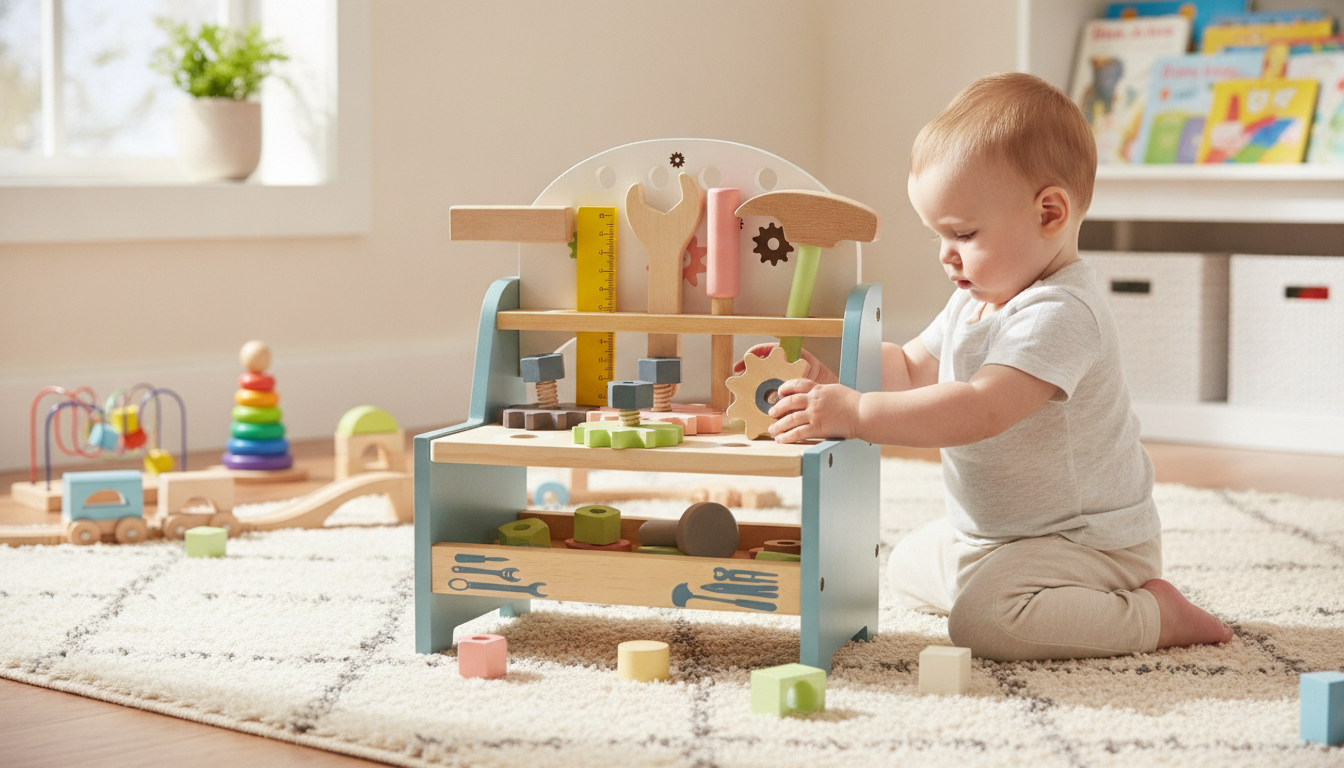
Mini Wooden Tool Bench Set for Kids: Build, Pretend, Learn
A wooden tool bench brings hands-on building into everyday play—letting kids measure, twist, tap, and “fix” while practicing real-world skills like problem-solving, sequencing, and fine-motor control. This mini bench set is designed for imaginative construction play with a classic wooden look that fits playrooms and bedrooms alike. It’s the kind of toy that invites kids to slow down, focus, and repeat actions until they feel confident—then proudly start all over again with a brand-new “project.”
What a Wooden Tool Bench Helps Kids Practice
A mini tool bench set can look simple at first glance, but it naturally supports a wide range of early skills—especially when kids return to it again and again.
- Fine-motor strength from turning, tightening, fitting pieces together, and placing parts with accuracy
- Hand–eye coordination through lining up holes, matching shapes, and assembling simple builds
- Early math concepts like counting pieces, sorting by size, comparing lengths, and basic patterning
- Planning and patience by following a simple build idea, adjusting when something doesn’t fit, and trying again
- Language and social skills through role-play: “builder,” “repair shop,” “home project,” and cooperative teamwork
Because the play is open-ended, children can participate at different levels: one child might sort and name pieces, while another builds a “crane,” “bridge,” or “robot” and explains how it works.
What’s Typically Included in the Set
Mini wooden tool bench sets vary by brand, but most include the same core parts that make building feel purposeful (and repeatable).
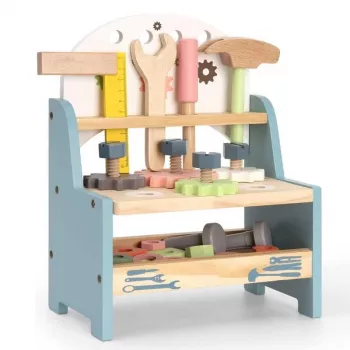
- A compact wooden bench surface that acts as a dedicated “work zone” for building and pretend repairs
- Toy tools such as a hammer, wrench, screwdriver-style tool, and other kid-friendly accessories (varies by set)
- Construction pieces like bolts, nuts, connectors, and wooden components for simple builds
- A play format that encourages open-ended combinations—build, take apart, and rebuild in new ways
- A lightweight design that can be moved from floor play to tabletop play as needed
Quick look: play features and what they encourage
| Play feature | What kids practice | Easy activity idea |
|---|---|---|
| Turning and fastening pieces | Grip strength, wrist rotation, patience | Tighten/loosen parts until they feel “just right” |
| Sorting and matching components | Visual discrimination, early math | Sort by size/color, then build a repeating pattern |
| Hammer-style tapping play | Coordination, controlled force | “Fix” pretend loose parts (gentle taps) |
| Pretend repair scenarios | Imagination, communication | Run a mini repair shop: take “orders,” diagnose, and “repair” |
Why Wood Matters for Pretend Construction Play
- Tactile feedback: wood has a satisfying weight and texture that makes tool motions feel more realistic
- Durability: built for repeated assemble/disassemble cycles, especially for kids who like to rebuild the same idea many times
- Calmer sensory feel: often quieter and less overstimulating than many electronic toys, making it easier to focus on the building process
- Timeless style: blends into home spaces and can be shared among siblings or saved for later
For many families, the best part is how wood invites steady, “I can do it” repetition—twist, fit, check, adjust—without the toy doing the thinking for the child.
Safety and Setup Tips for Confident Play
- Check age guidance and supervise younger children, especially around small parts that could present a choking risk.
- Do a quick pre-play scan: ensure pieces are intact, with no cracks, sharp edges, or loose components.
- Create a parts zone: a small tray or bin keeps pieces from scattering—helpful for preventing lost parts and reducing tripping hazards.
- Teach tool rules early: gentle tapping only, tools stay in the build area, and pieces go back into storage after play.
- If your child mouths toys, limit access to the smallest components and focus on larger build-only activities.
For additional toy-safety guidance, review HealthyChildren.org’s toy safety tips and the CPSC choking hazards resource.
Play Ideas: From Free Build to Simple Challenges
Gifting Guide: Choosing the Right Moment to Give It
Care, Storage, and Keeping Pieces Together
Helpful Add-Ons for Organized, Mess-Free Play (In Stock)
- Vintage Embossed Glass Storage Jar with Airtight Seal – 23.7 oz for storing nuts/bolts-style pieces in one visible, grab-and-go spot.
- Girls Winter Warm Jogger Pants with Elastic Waist for cozy, flexible play that still feels “ready for work.”
- Women’s Quick-Dry Yoga & Fitness Two-Piece Set with Shockproof Vest for parents who like to stay comfortable while supervising active, on-the-floor building sessions.
FAQ
What age is a wooden tool bench set best for?
Many wooden tool bench sets work well for preschool through early elementary ages (often around 3–7), depending on whether the set includes small parts. Check the manufacturer’s age rating, and look for signs of readiness like turn-taking, following simple directions, and safe handling of pieces.
Is this kind of tool bench safe if my child still puts toys in their mouth?
Extra caution is needed if mouthing is still common: supervise closely and remove or limit the smallest components to reduce choking risk. When possible, choose activities that use larger parts only and follow the toy’s safety guidance.
How does a tool bench support learning without feeling like a lesson?
Kids learn by doing: tightening, aligning, sorting, and rebuilding naturally practices fine-motor control, sequencing, and problem-solving. Pretend repair play also builds early math vocabulary (more/less, longer/shorter) and communication skills as children explain their “plan” and collaborate.









Leave a comment