Best Multi-Level Cat Tree: Posts, Caves & Perches
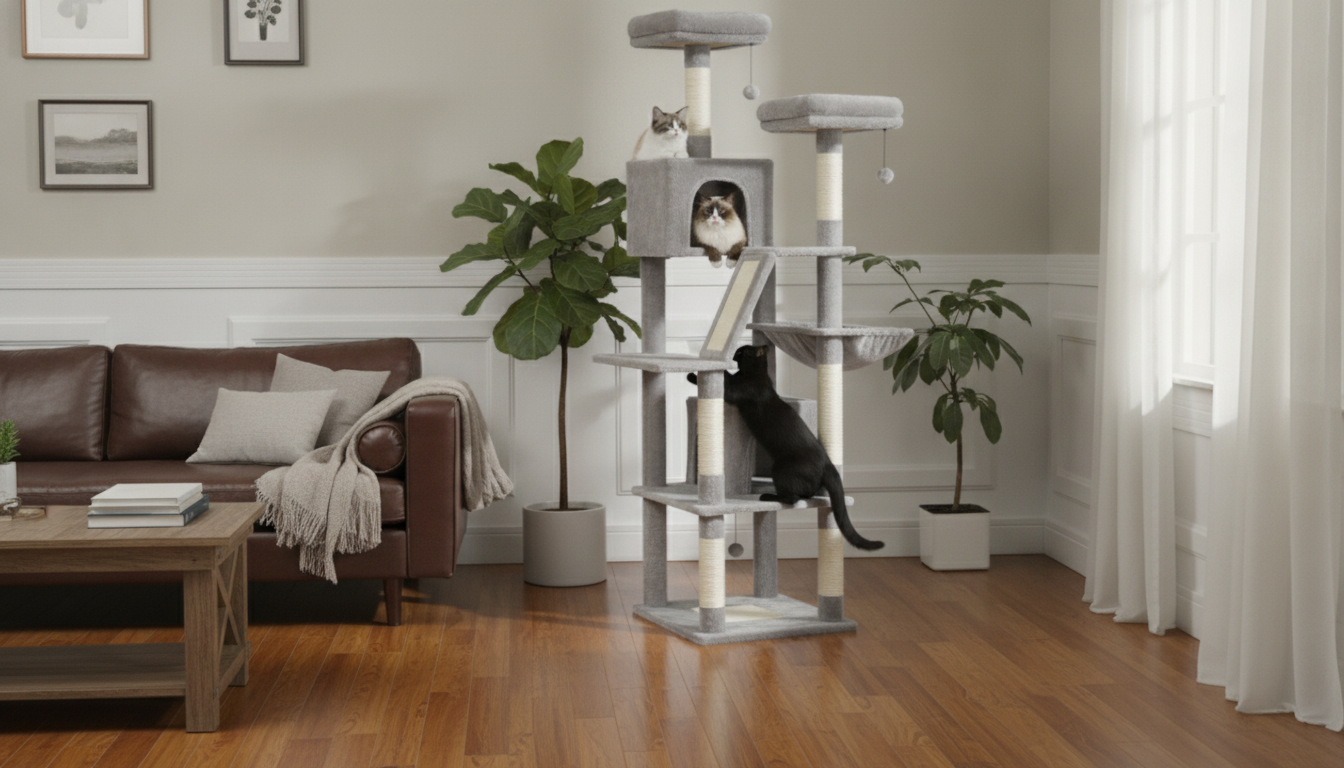
Large Multi-Level Cat Tree with Scratching Posts, Caves, and Perches for Indoor Cats
A multi-level cat tree gives indoor cats a place to climb, scratch, perch, and hide—helping channel natural instincts away from furniture while adding a dedicated “cat zone” to the home. The right setup can make an apartment feel bigger to a cat, offer calmer routines in multi-pet households, and provide daily enrichment without needing extra floor space.
Below is what to look for in a large multi-tier design, how to position it for stability, and simple ways to make it the most-used spot in the room.
Why multi-level spaces matter for indoor cats
Indoor cats still have the same instincts as outdoor cats: they want vantage points, safe retreats, and reliable scratching surfaces. A tall, multi-level tree bundles those needs into one predictable location.
- Vertical height creates safe observation spots that can reduce stress, especially when kids or other pets are active at ground level.
- Separate zones (perches + caves) support both play and rest. Many cats cycle between “on patrol” and “do not disturb,” sometimes within the same hour.
- Climbing and jumping offer low-impact exercise that fits smaller rooms—helpful for indoor cats that don’t have stairs or long hallways to sprint.
- A dedicated scratch surface protects furniture by giving claws a better, more satisfying option than a sofa arm or rug edge.
For more detail on creating a cat-friendly home environment, the American Association of Feline Practitioners (AAFP) guidelines and the ASPCA’s cat care resources both emphasize enrichment, predictable safe spaces, and appropriate scratching opportunities.
Key features to look for: posts, caves, and perches
Not all cat trees feel equally “safe” to a cat. The best ones balance comfort with confident footing, so cats can jump up without the structure swaying under them.
- Scratching posts: prioritize thicker posts with durable wrap (commonly sisal) so cats can fully stretch while scratching.
- Caves/condos: enclosed spaces support naps and decompression; more than one hideout is especially helpful in multi-cat homes.
- Perches: top platforms should be roomy enough for lounging, with stable support under the edges.
- Step spacing: staggered levels help kittens, seniors, or less athletic cats climb comfortably.
- Surface materials: soft coverings feel inviting, but they should be tightly attached to reduce snagging and peeling.
| Feature | What to check | Why it matters |
|---|---|---|
| Scratching posts | Post thickness, wrap coverage, base stability | Supports full-body stretch and reduces wobble |
| Caves | Interior size, number of entrances, placement | Gives a secure retreat and prevents cornering |
| Perches | Platform width, edge support, anti-slip feel | Encourages confident lounging and jumping |
| Base | Footprint size, weight, anti-tip design | Improves stability during sprints and leaps |
| Assembly | Clear instructions, labeled parts, included hardware | Faster setup and fewer loose connections |
Product spotlight: Large Multi-Level Cat Tree
If you’re aiming to create a single “all-in-one” station for an indoor cat (or a small group of cats), a larger multi-tier tree can cover the essentials without taking over the room. The Large Multi-Level Cat Tree with Scratching Posts, Caves, and Perches for Indoor Cats is built to function as a climbing and lounging hub with multiple tiers for movement and choice.
- Multiple tiers give cats options for up-and-down movement, which helps prevent “traffic jams” when more than one cat wants the same spot.
- Scratching posts create a dedicated scratch zone near favorite hangout levels, making it easier to redirect scratching away from furniture.
- Caves provide hide-and-rest breaks between play sessions, especially useful for shy cats or cats that prefer enclosed naps.
- Perches create elevated lookout spots for sunbathing, birdwatching, and monitoring household activity.
- Vertical design works well when floor space is limited but wall height is available.
| Item | Details |
|---|---|
| Product | Large Multi-Level Cat Tree with Scratching Posts, Caves, and Perches for Indoor Cats |
| Price | $84.82 USD |
| Availability | In stock |
| Best for | Indoor enrichment: climbing, scratching, resting, and perching |
To make daily training and treat rewards easier, consider keeping cat treats or catnip in a dedicated container such as the Vintage Embossed Glass Storage Jar with Airtight Seal – 23.7 oz. Having rewards within reach often helps reinforce “use the tree” habits in the first week.
Placement tips for stability and daily use
Where you put a large cat tree matters almost as much as the build itself. The goal is a stable, inviting location that fits your cat’s natural routes through the home.
Getting cats to use it (without forcing it)
Care, upkeep, and safety checks
FAQ
How tall should a multi-level cat tree be for indoor cats?
A practical range is often 48–72 inches for most homes, but stability and step spacing matter more than maximum height. Choose a height your cat can reach comfortably while still offering a higher perch for observing the room.
Do cat caves help with anxious or shy cats?
Yes—enclosed spaces can support hiding and decompression, which helps many cats relax. Place the tree in a quieter area and add familiar bedding so the cave smells like “home” right away.
How can scratching posts reduce furniture scratching?
They work best when the post is sturdy and tall enough for a full stretch, and when it’s placed near the area your cat already tries to scratch. Reward use, and redirect immediately and consistently so the post becomes the default option.









Leave a comment