Wooden Play Kitchen with Ice Maker: Kids Pretend Set
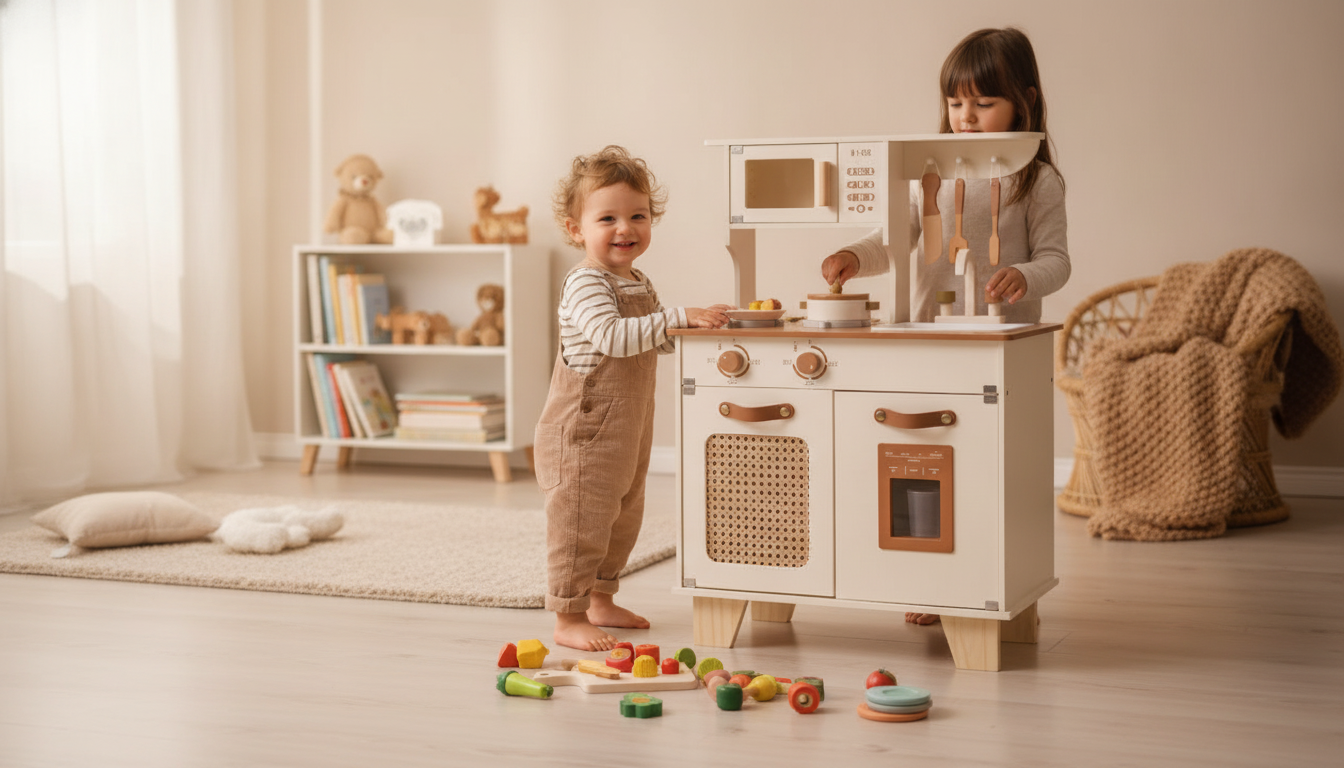
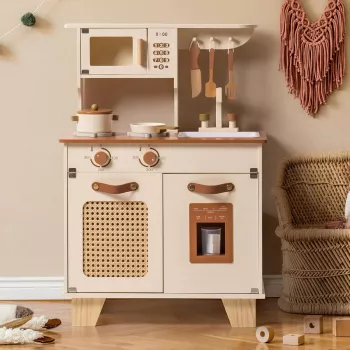
Wooden Kids Play Kitchen with Ice Maker & Accessories
A wooden play kitchen can turn everyday pretend play into a hands-on routine of “cooking,” serving, and cleaning—building confidence, language, and social skills along the way. This set adds an ice maker-style feature and included accessories for richer role-play and longer play sessions. With a sturdy, furniture-like presence, it works as a dedicated play station that kids can return to daily—whether they’re running a breakfast café, hosting a pretend party, or simply “making ice” for stuffed-animal guests.
What makes this play kitchen different
Many pretend kitchens focus on the basics: a stovetop and an oven door. This design feels more like a full mini “kitchen corner,” which helps children settle into longer storylines rather than quick, one-step play.
- Wooden construction creates a sturdy, furniture-like feel that fits naturally in a playroom or bedroom corner.
- Ice maker detail encourages imaginative “drink station” play alongside cooking scenarios.
- Accessory set included supports open-ended play without needing extra add-ons right away.
- Great for many play styles, from solo play to siblings sharing roles to cooperative playdates.
If you’re looking for a ready-to-go option, the Wooden Kids Play Kitchen with Ice Maker & Accessories – Pretend Cooking Toy for Children is available in stock, making it a practical gift choice when time matters.
Ice maker play: simple feature, big imagination
The ice maker-style feature may look like a small detail, but it often becomes a favorite “job” during play. It creates a second zone where kids can focus on drinks, orders, and hosting—without interrupting whatever is “cooking” on the stovetop.
- A second play zone: kids can run a drink counter, café orders, or a “restaurant” hosting game.
- Encourages turn-taking: one child can “cook” while another prepares “ice” and serves.
- Easy to pair with what you already have: cups, pretend groceries, play food, or even a toy cash register.
- Supports sequencing: fill, press, dispense, serve, and “clean up” after customers.
For caregivers, that last point matters: play routines that include steps help children practice following an order, remembering what comes next, and finishing a task—even when it’s all pretend.
Included accessories and ways to use them
Accessories keep pretend kitchens from feeling “empty,” and they also make it easier for children to start playing independently. Instead of needing a grown-up to suggest ideas, the pieces themselves become prompts for storytelling.
- Play a “menu” game: name items, count them, and take pretend orders (bonus: kids love writing scribbly receipts).
- Practice sorting: group utensils vs. cookware vs. food pieces to build early categorizing skills.
- Use quick story prompts: breakfast café, family dinner, grocery store, birthday party, or “cooking show.”
- Rotate accessories weekly to keep play fresh and reduce clutter in the play area.
To keep small pieces organized between play sessions, consider a dedicated container like the Vintage Embossed Glass Storage Jar with Airtight Seal – 23.7 oz. It’s a simple way to corral smaller kitchen accessories (with adult supervision and placement out of toddler reach).
Skills kids build during pretend cooking
Pretend play is more than entertainment—it’s practice. When children run their own “kitchen,” they naturally rehearse communication, cooperation, and problem-solving in a low-pressure way. The American Academy of Pediatrics highlights the developmental value of play for building social-emotional and cognitive skills (AAP: The Power of Play).
- Language growth: naming foods, describing steps, and using polite “restaurant” phrases (“May I take your order?”).
- Social-emotional learning: sharing, negotiating roles, and expressing preferences (“I want to be the chef first”).
- Fine motor practice: grasping utensils, placing items on shelves, opening/closing doors and compartments.
- Early math: counting pieces, comparing sizes, and “timing” cooking steps.
- Everyday life skills: tidying up, organizing, and caring for play items after a “meal.”
Safety and setup checklist for a play kitchen corner
A great play kitchen setup is stable, easy to access, and simple to clean. Before gifting or setting it up, it’s worth doing a quick once-over—especially if younger siblings will be nearby. For broader toy safety guidance, consult the U.S. Consumer Product Safety Commission’s toy safety resources (CPSC Toy Safety) and look for products designed with recognized standards in mind (see ASTM F963 overview).
| Item to check | What to look for | Why it matters |
|---|---|---|
| Assembly fit | Doors/drawers align; knobs secure | Prevents pinches and improves durability |
| Accessory size | No tiny parts for younger kids | Reduces choking risk |
| Stability | Doesn’t wobble when pushed lightly | Helps prevent tipping during play |
| Cleaning plan | Wipeable surfaces; washable accessories if included | Keeps the play area hygienic |
Gifting and room-fit tips
Product details and where to get it
- Name: Wooden Kids Play Kitchen with Ice Maker & Accessories – Pretend Cooking Toy for Children
- Availability: In stock
- Price: $129.17 (USD)
- Use: Works as a standalone play station or alongside play food sets and pretend grocery items already in the home.
FAQ
What age is a wooden play kitchen best for?
Wooden play kitchens are typically a great fit for preschool and early elementary ages, especially as kids start enjoying longer pretend-play storylines. Always check the manufacturer’s age guidance and consider accessory size and supervision for younger children.
How do you clean and maintain a wooden play kitchen?
Wipe surfaces with a damp cloth and mild soap, avoid soaking the wood, and dry immediately. After assembly and with regular use, periodically tighten screws and check doors, drawers, and moving parts for smooth operation.
Does the ice maker use real ice or water?
No—this is a pretend-play feature meant for safe role-play. Use play “ice” pieces or accessories and avoid adding real water unless the product is explicitly designed for it.








Leave a comment